Are We Heading into a Balanced Market?

Are We Heading into a Balanced Market?
If you’ve been keeping an eye on the housing market over the past couple of years, you know sellers have had the upper hand. But is that going to shift now that inventory is growing? Here’s a breakdown of what you need to know.
What Is a Balanced Market?
A balanced market is generally defined as a market with about a five-to-seven-month supply of homes available for sale. In this type of market, neither buyers nor sellers have a clear advantage. Prices tend to stabilize, and there’s a healthier number of homes to choose from. And after many years when sellers had all the leverage, a more balanced market would be a welcome sight for people looking to move. The question is – is that really where the market is headed?
After starting the year with a three-month supply of homes nationally, inventory has increased to four months. That may not sound like a lot, but it means the market is getting closer to balanced – even though it’s not quite there yet. It’s important to note this increase in inventory is not leading to an oversupply that would cause a crash. Even with the growth lately, there’s still nowhere near enough supply for that to happen.
The graph below uses data from the National Association of Realtors (NAR) to give you an idea of where inventory has been in the past, and where it’s at today:
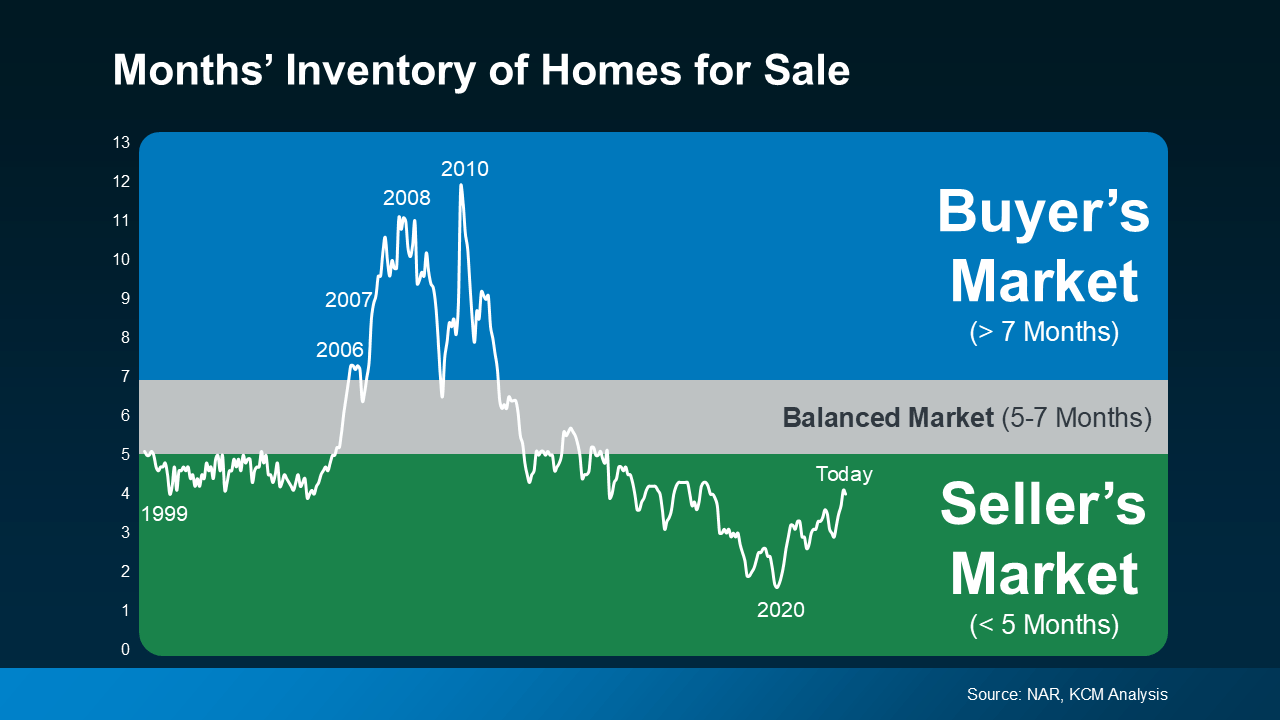 For now, this is still seller’s market territory – it’s just not as frenzied of a seller’s market as it’s been over the past few years. As Mark Fleming, Chief Economist at First American, says:
“The faster housing supply increases, the more affordability improves and the strength of a seller’s market wanes.”
What This Means for You and Your Move
Here's how this shift impacts you and the market conditions you'll face when you move. Lawrence Yun, Chief Economist at NAR, explains:
“Homes are sitting on the market a bit longer, and sellers are receiving fewer offers. More buyers are insisting on home inspections and appraisals, and inventory is definitively rising on a national basis.”
The graphs below use the latest data from NAR and Realtor.com to help show examples of these changes:
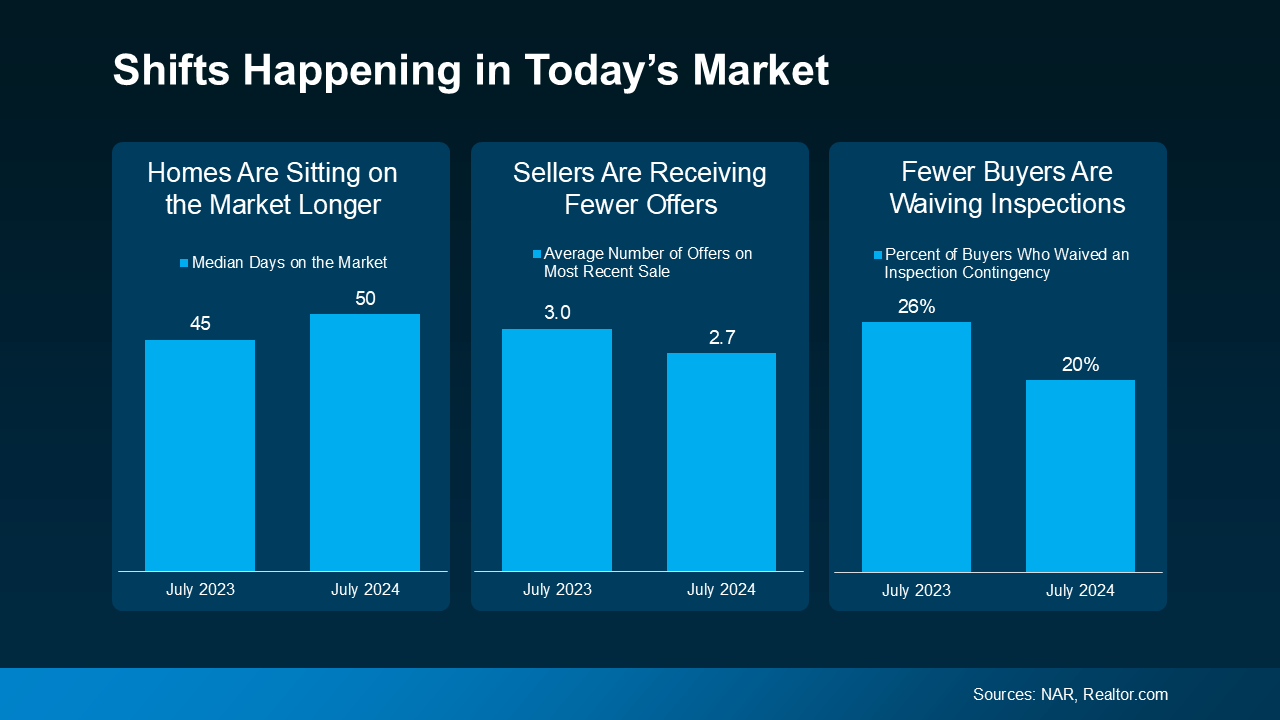 Homes Are Sitting on the Market Longer: Since more homes are on the market, they’re not selling quite as fast. For buyers, this means you may have more time to find the right home. For sellers, it’s important to price your house right if you want it to sell. If you don’t, buyers might choose better-priced options.
Sellers Are Receiving Fewer Offers: As a seller, you might need to be more flexible and willing to compromise on price or terms to close the deal. For buyers, you could start to face less intense competition since you have more options to choose from.
Fewer Buyers Are Waiving Inspections: As a buyer, you have more negotiation power now. And that’s why fewer buyers are waiving inspections. For sellers, this means you need to be ready to negotiate and address repair requests to keep the sale moving forward.
How a Real Estate Agent Can Help
But this is just the national picture. The type of market you’re in is going to vary a lot based on how much inventory is available. So, lean on a local real estate agent for insight into how your area stacks up.
Whether you’re buying or selling, understanding how the market is changing gives you a big advantage. Your agent has the latest data and local insights, so you know exactly what’s happening and how to navigate it.
Bottom Line
The real estate market is always changing, and it’s important to stay informed. Whether you’re buying or selling, understanding this shift toward a balanced market can help. If you have any questions or need expert advice, don’t hesitate to reach out.
Categories
- All Blogs 484
- Buying A Home 67
- Community Neighborhood Guides 8
- DFW Lifestyle 38
- Eat, Drink, & Shop Local 12
- First Time Home Buyer Tips 162
- Homeownership Tips & Tricks 25
- Living in Arlington, TX 7
- Living in Burleson 8
- Living in Dallas Fort Worth Metroplex 78
- Living In Texas 18
- Mansfield, TX 14
- Midlothian, TX 13
- Mortgage Rates, Financing, and Affordability 41
- New Construction & Developments in DFW 14
- Real Estate Investing 33
- Real Estate News 66
- Rentals, Property Management, & Leasing 13
- Selling Your House 163
- Texas Relocation Guide 41
- Things To Do in DFW 4
Recent Posts









MY BLOGS
- What Actually Adds Value to a Mansfield Home? 5 Upgrades That Pay Off vs. 3 That Don't If you're a homeowner in Mansfield, Texas, and you've been thinking about making some improvements to your house, I want to ask you something. Are you making those improvements because you want to enjoy them, or b
- Parks at Panchasarp Farms: Discover Master-Planned Living in Burleson, TX What if you could find a neighborhood where you could enjoy beautiful newer homes, walking trails, parks, a community swimming pool, and plenty of outdoor space, all while being just minutes from the everyday conveniences of B
- Moving from California to Texas? 12 Things You Need to Know Before Relocating to DFW So, you're thinking about leaving California and moving to Texas? First of all, welcome! Or at least, potentially welcome! Maybe you're tired of California home prices. Maybe you've accepted a job in Dallas–Fort Wor
- Is Kennedale, TX Really a Small Town? What Living in DFW’s Best-Kept Secret Is Actually Like If you’ve driven around southern Tarrant County, there’s a good chance you’ve driven near Kennedale without really thinking much about it. It’s tucked between Arlington, Mansfield and Fort Worth, and honestl
MY BLOGS
- What Actually Adds Value to a Mansfield Home? 5 Upgrades That Pay Off vs. 3 That Don't
- Parks at Panchasarp Farms: Discover Master-Planned Living in Burleson, TX
- Moving from California to Texas? 12 Things You Need to Know Before Relocating to DFW

MY BLOGS
Local News, Events & More Emailed Daily!