The Mortgage Rate You See Online Isn’t Necessarily the Rate You’d Get

The Mortgage Rate You See Online Isn’t Necessarily the Rate You’d Get
If you've been thinking about buying a home in North Texas, there's a good chance you've seen the mortgage-rate headlines lately.
And if you're anything like a lot of buyers I talk to, you may have had the same reaction:
“Well...I guess we're waiting.”
I completely understand.
Mortgage rates matter. They affect your monthly payment and how much home fits comfortably within your budget.
But there's one really important thing to remember when you're scrolling through the latest rate stories online:
The rate you see in a headline isn't necessarily the rate you would get.
That's because there isn't one mortgage rate that every buyer gets.
Your actual rate depends on a number of factors specific to you, your finances and the loan you're using.
So before you decide that buying in Mansfield, Texas, Arlington, Texas, Burleson, Texas, Kennedale, Texas, Grand Prairie, Texas, or another North Texas community isn't possible because of today's rates, I would have a conversation with a lender first.
You might learn something different.
So, What Determines Your Mortgage Rate?
This is where the conversation gets more personal.
The rate you see advertised online is useful for understanding the general direction of the market, but it doesn't tell you exactly what your mortgage will cost.
Your lender will look at your individual financial picture, including things like:
Your Credit
Your credit history and score can affect the mortgage options available to you and the rate you may qualify for.
That's one reason it's a good idea to know where your credit stands before you start shopping for a home.
And if your score isn't where you'd like it to be, that doesn't necessarily mean you can't buy.
It may simply mean you and your lender need to come up with a plan.
Your Debt-to-Income Ratio
Your lender will also look at your existing debts compared with your income.
This is commonly referred to as your debt-to-income ratio, or DTI.
Why does that matter?
Because two people earning the exact same salary could have very different borrowing situations if one has significantly more monthly debt.
Your Down Payment
Your down payment can also affect your loan and overall financing picture.
And here's another misconception I hear all the time:
You don't automatically need 20% down to buy a home.
There are different loan programs with different requirements, depending on your circumstances.
That's why I always encourage buyers to talk to a lender before deciding how much money they think they need to save.
The Type of Loan You're Using
Conventional, FHA, VA and other loan programs have different guidelines and pricing.
The term of the loan can matter, too.
Your lender can walk you through the options you're eligible for and explain how each one would affect your payment and overall costs.
Your Rate Isn't the Only Piece You Can Look At
This is where things get particularly interesting in today's market.
The rate you qualify for isn't necessarily the end of the conversation.
Depending on the transaction and loan guidelines, there may be ways to structure the purchase that affect your upfront costs or monthly payment.
For example, you may come across a mortgage-rate buydown.
A rate buydown can reduce your interest rate for a period of time or, in some cases, for the life of the loan, depending on the type of buydown.
And who pays for it?
It doesn't always have to be the buyer.
Depending on the circumstances, a seller or builder may offer a concession toward a rate buydown or other allowable closing costs as an incentive.
This is one reason I'm encouraging buyers not to look at a home and think only:
“The interest rate is too high.”
There may be other pieces of the transaction worth discussing.
This Is Especially Interesting With North Texas New Construction
If you're looking at new construction in Mansfield, Texas, Arlington, Texas, or surrounding South DFW communities, don't overlook builder incentives.
Builders sometimes offer financing incentives, closing-cost assistance or rate buydowns through their preferred lenders.
Those incentives can change the math of a purchase.
But—and this is important—don't compare a builder's advertised rate to a rate you see online without looking at the entire offer.
A special rate may have specific requirements, a particular loan term, points or other conditions attached to it.
Your lender can help you understand what you're actually being offered and what the long-term cost looks like.
Seller Concessions Can Matter, Too
The same concept applies to resale homes.
Depending on the loan program and transaction, a seller may be able to contribute toward certain buyer closing costs.
That could potentially free up some of your cash for other priorities.
Maybe you were worried about having enough money left after closing for moving expenses.
Maybe you're trying to keep some savings in the bank.
Maybe you'd rather use available funds differently.
The important thing is to understand all of your options before deciding what you can or can't afford.
Your First Step Shouldn't Be House Hunting
I know that sounds funny coming from a real estate agent.
But honestly, I would rather have a buyer talk to a lender before we spend hours looking at houses.
Getting pre-approved gives you a much clearer picture of what you're working with.
You'll have a better idea of:
-
What price range you're comfortable shopping in
-
What your estimated payment could look like
-
What loan programs may be available
-
How much cash you'll need to bring to closing
-
What your actual interest rate may be
-
What you may need to work on before you're ready to buy
And it can make the home search so much less stressful.
Instead of scrolling through listings wondering, “Could I afford that?”, you have actual numbers to work with.
Pre-Qualification vs. Pre-Approval
You may hear both terms when you start talking to lenders.
A pre-qualification is generally an early estimate based on information you provide.
A pre-approval typically involves a more detailed review of your financial information and gives you a stronger understanding of what you may qualify for.
The exact process varies by lender, so ask what they need from you and what their pre-approval actually represents.
The important part is getting beyond the online mortgage calculator and finding out what your personal numbers look like.
Don't Let a Rate Headline Make the Decision for You
One of the biggest mistakes I see buyers make is letting a national headline make a local decision for them.
Categories
- All Blogs 482
- Buying A Home 66
- Community Neighborhood Guides 7
- DFW Lifestyle 38
- Eat, Drink, & Shop Local 12
- First Time Home Buyer Tips 161
- Homeownership Tips & Tricks 24
- Living in Arlington, TX 7
- Living in Burleson 7
- Living in Dallas Fort Worth Metroplex 78
- Living In Texas 18
- Mansfield, TX 14
- Midlothian, TX 13
- Mortgage Rates, Financing, and Affordability 41
- New Construction & Developments in DFW 14
- Real Estate Investing 33
- Real Estate News 66
- Rentals, Property Management, & Leasing 13
- Selling Your House 163
- Texas Relocation Guide 40
- Things To Do in DFW 4
Recent Posts








MY BLOGS
- Moving from California to Texas? 12 Things You Need to Know Before Relocating to DFW So, you're thinking about leaving California and moving to Texas? First of all, welcome! Or at least, potentially welcome! Maybe you're tired of California home prices. Maybe you've accepted a job in Dallas–Fort Wor
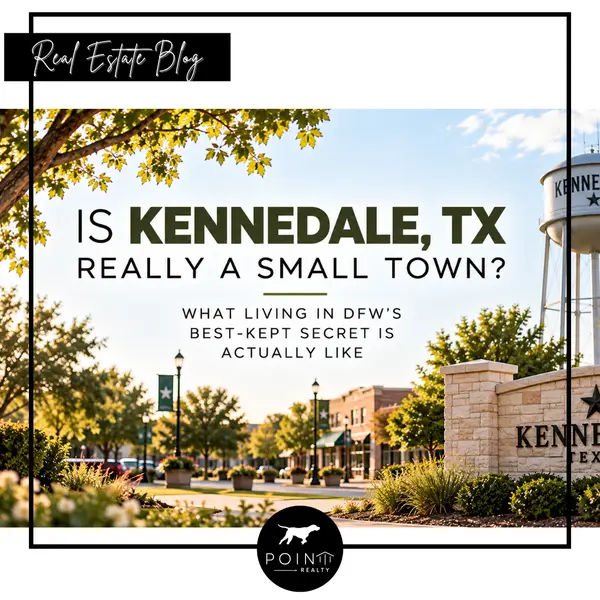
- Is Kennedale, TX Really a Small Town? What Living in DFW’s Best-Kept Secret Is Actually Like If you’ve driven around southern Tarrant County, there’s a good chance you’ve driven near Kennedale without really thinking much about it. It’s tucked between Arlington, Mansfield and Fort Worth, and honestl
- Texas Homeowners Insurance Spikes: What DFW Buyers Need to Know Before Buying a Home You've found a house you love. The price works. The mortgage payment looks manageable. You've calculated your down payment, checked the property taxes, and maybe even negotiated some seller concessions. Then you get
- Thinking About Downsizing or Multigenerational Living? ADUs Are Changing the Way South DFW Families Use Their Homes What if downsizing didn't necessarily mean moving away from the neighborhood you love? Or what if your parents could live close by without actually living in your house? Or maybe your
MY BLOGS
- Moving from California to Texas? 12 Things You Need to Know Before Relocating to DFW
- Is Kennedale, TX Really a Small Town? What Living in DFW’s Best-Kept Secret Is Actually Like
- Texas Homeowners Insurance Spikes: What DFW Buyers Need to Know Before Buying a Home

MY BLOGS
Local News, Events & More Emailed Daily!