The Pricing Mistake That Could Cost You Your Sale

Most sellers come into the market with one number in mind. And it’s often the one that costs them the most. That's their asking price.
A survey from Realtor.com shows about 8 in 10 (80%) of sellers expect to sell at or above their asking price today. But here’s where things get interesting.
In reality, only about 4 out of every 10 (roughly 40%) actually do.
That’s a big gap. And it’s where a lot of sellers get caught off guard. So, why the disconnect? And how can you set yourself up to be one of the 4 in 10 that get top dollar?
Let’s break it down.
What Should You Really Expect To Get for Your House?
That 40% may sound low at first, but it’s not.
If you look back to the last typical year for the housing market (2019), what we're really seeing is a return to what’s normal (see chart below). If anything, slightly more homeowners are able to sell above list price today compared to 2019:
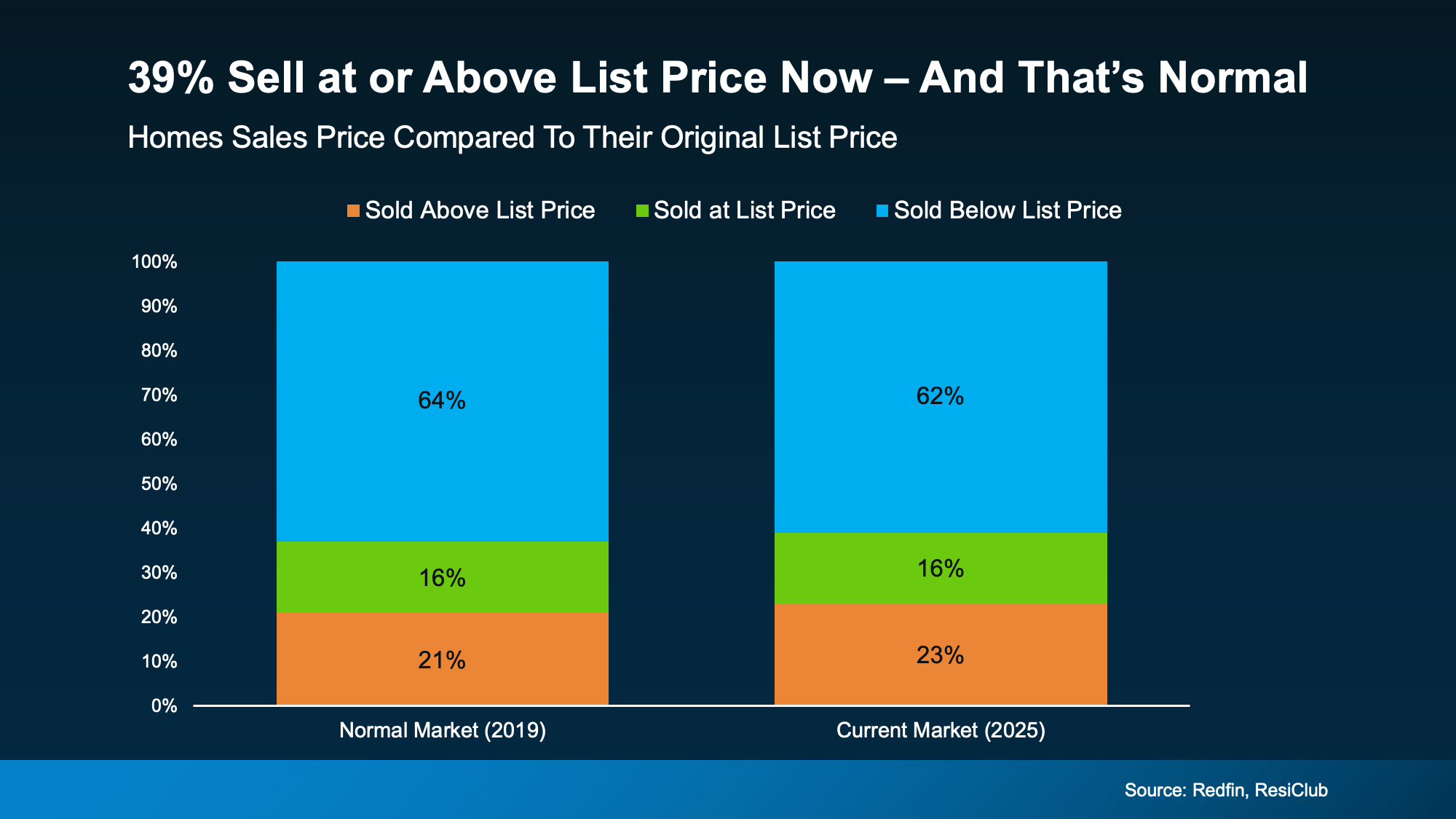 It only feels low because the past few years were anything but typical. Between 2020 and mid-2022, buyer demand was sky-high and the number of homes for sale was at record lows. Almost everything sold over asking.
Now, the market has shifted.
There are more homes for sale. Buyers have more options. And that means they’re more selective about how they spend their money.
In other words, the rules have changed – and pricing like it’s still 2021 is where sellers run into trouble. You have to meet the market where it is if you really want to cash in big.
What Happens When a Home Is Priced Too High
Here’s the reality. It’s easy to think pricing high gives you room to negotiate. But it usually does the opposite.
When your home is priced above what buyers expect, in this market, they don’t negotiate. They move on.
Because buyers notice price first. And if your home doesn’t line up with similar options in your area, it may not even get a showing. And that’s when things start to snowball:
-
A high price gets less interest from buyers.
-
Less interest means fewer offers.
-
And fewer offers usually means more time on the market.
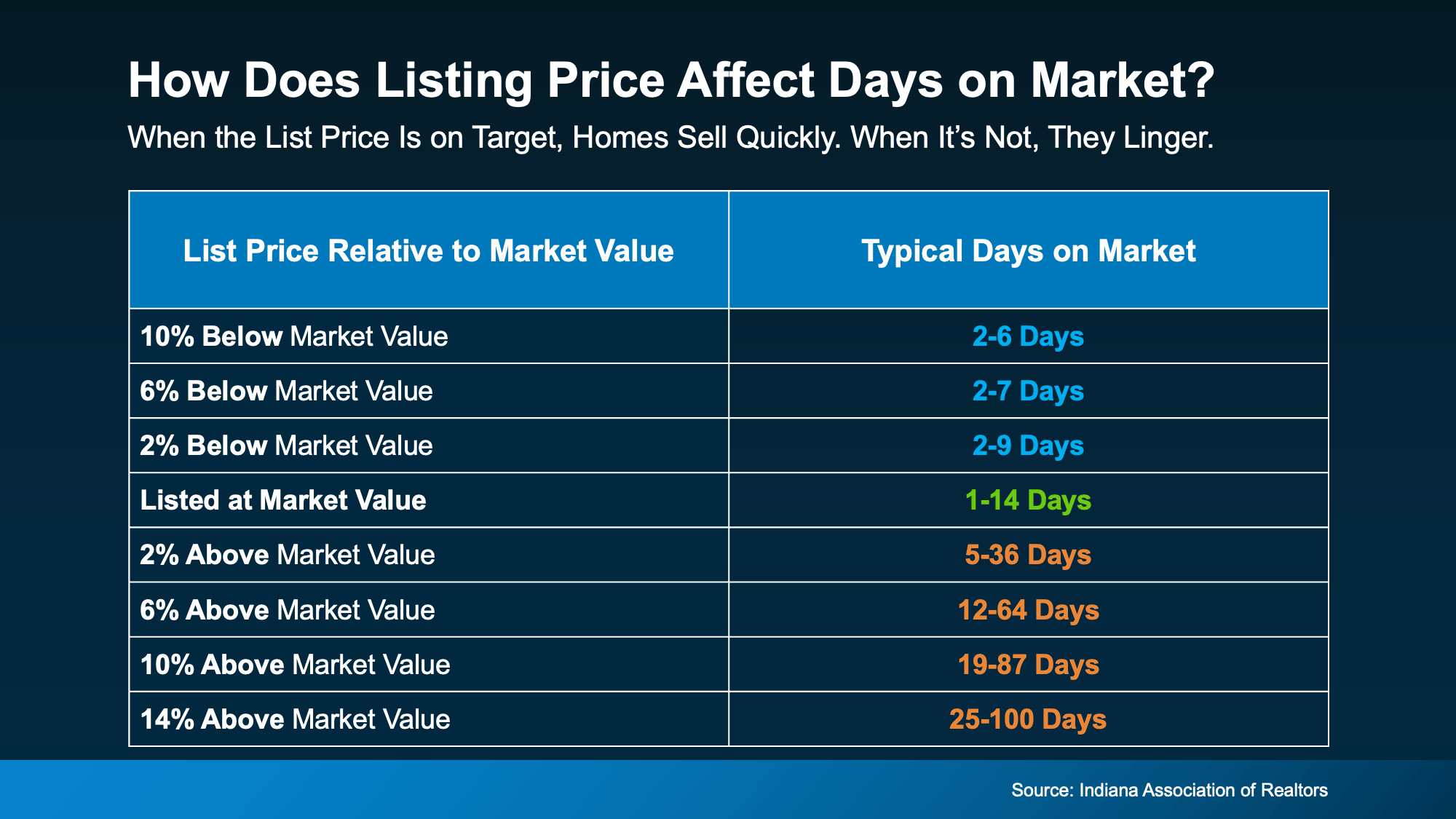
Take a look at this table from the Indiana Association of Realtors. While this data is from one state, the general trend is going to hold true across many markets in the country. It shows that homes listed at or under market value sell fast. But homes priced high? They linger. And that delay comes at a very real cost.
 The Price Cut Trap (And How To Avoid It)
When a home sits that long without offers, a lot of sellers will do a price reduction. According to Realtor.com, 16.7% of sellers are going that route today.
But here’s the real problem. Even a price cut doesn’t guarantee a sale.
In fact, some buyers will see a reduction as a sign something’s wrong with the house – even when nothing is.
That’s why data from the National Association of Realtors (NAR) shows the longer a home sits, the bigger that price cut tends to be to attract buyers back:
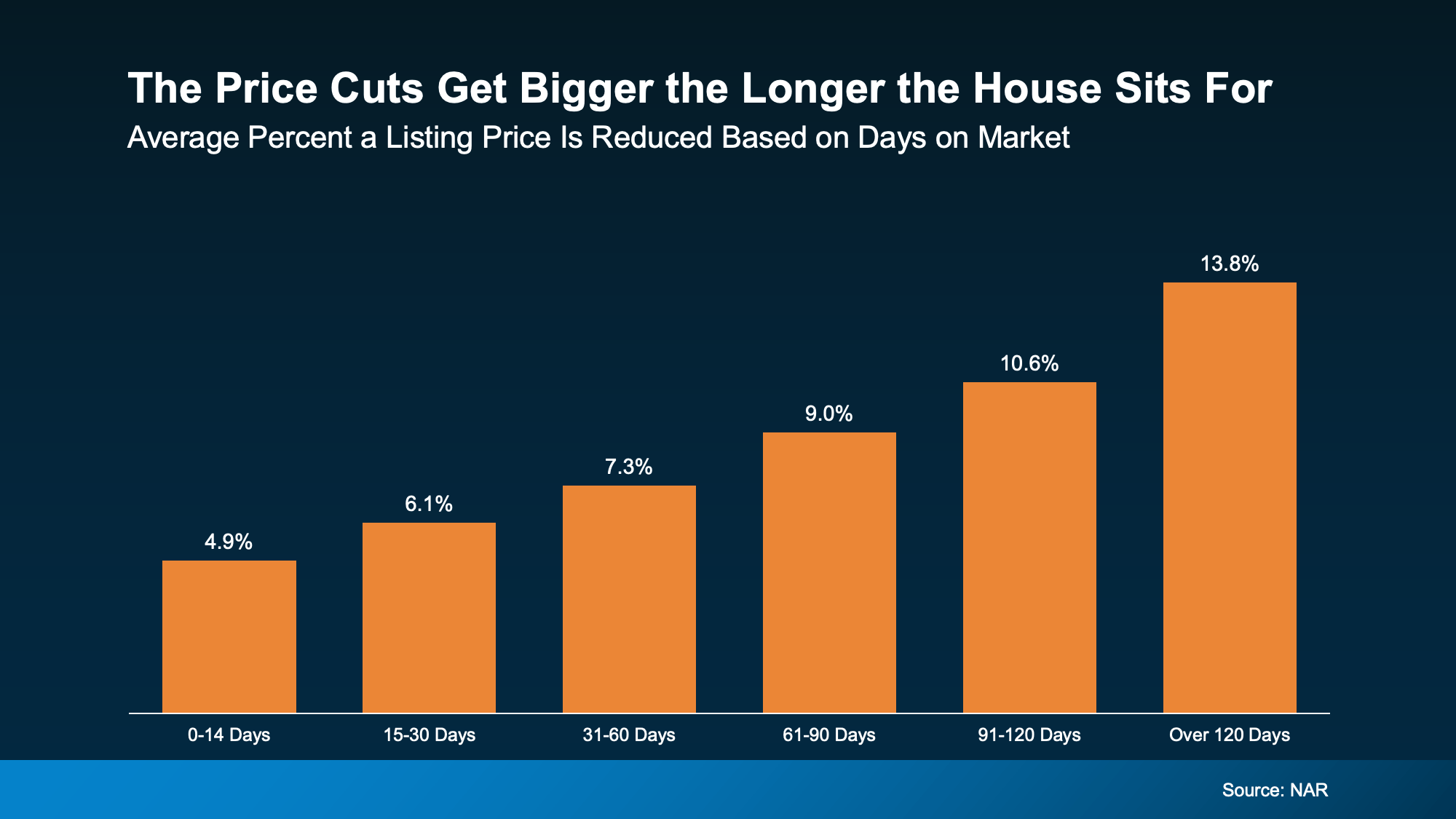 So, what starts as a strategy to “leave room” for negotiate can end up costing you more in the long run.
Why Pricing Right from Day One Matters
Even though listing at or even just shy of market value may sound counter intuitive if you’re looking to get as much money for your house as possible, a lot of the time it really is the best strategy.
Because the goal isn’t just to list your house to see what price sticks. It’s to price it in a way that creates demand from day one.
NAR puts it best:
“While some sellers are pricing their homes higher than ever, a more ‘goldilocks’ frame of mind is a better approach to avoid price cuts and lingering time on the market.”
In other words, there’s a sweet spot. Too high, and buyers disappear. Too low, and they question the value.
But right in the middle? That’s where the magic happens.
And that’s where the right agent comes in.
They help you understand what buyers are actually paying right now, how your home compares, and how to price it so it stands out immediately. And in today’s market, that strategy is the difference between:
-
Listing high, watching it sit, and selling for less later.
-
Or, pricing it right, creating competition, and putting yourself in a position to win from the start.
Bottom Line
A lot of homeowners think they can list high now and negotiate later, but that’s a mistake that costs them. And it’s the reason only 4 out of every 10 sellers are getting their asking price or more.
If you want to be in that group, it starts with getting the price right from day one.
Let’s connect so we can make sure you are.
Categories
- All Blogs 482
- Buying A Home 66
- Community Neighborhood Guides 7
- DFW Lifestyle 38
- Eat, Drink, & Shop Local 12
- First Time Home Buyer Tips 161
- Homeownership Tips & Tricks 24
- Living in Arlington, TX 7
- Living in Burleson 7
- Living in Dallas Fort Worth Metroplex 78
- Living In Texas 18
- Mansfield, TX 14
- Midlothian, TX 13
- Mortgage Rates, Financing, and Affordability 41
- New Construction & Developments in DFW 14
- Real Estate Investing 33
- Real Estate News 66
- Rentals, Property Management, & Leasing 13
- Selling Your House 163
- Texas Relocation Guide 40
- Things To Do in DFW 4
Recent Posts








MY BLOGS
- Moving from California to Texas? 12 Things You Need to Know Before Relocating to DFW So, you're thinking about leaving California and moving to Texas? First of all, welcome! Or at least, potentially welcome! Maybe you're tired of California home prices. Maybe you've accepted a job in Dallas–Fort Wor
- Is Kennedale, TX Really a Small Town? What Living in DFW’s Best-Kept Secret Is Actually Like If you’ve driven around southern Tarrant County, there’s a good chance you’ve driven near Kennedale without really thinking much about it. It’s tucked between Arlington, Mansfield and Fort Worth, and honestl
- Texas Homeowners Insurance Spikes: What DFW Buyers Need to Know Before Buying a Home You've found a house you love. The price works. The mortgage payment looks manageable. You've calculated your down payment, checked the property taxes, and maybe even negotiated some seller concessions. Then you get
- Thinking About Downsizing or Multigenerational Living? ADUs Are Changing the Way South DFW Families Use Their Homes What if downsizing didn't necessarily mean moving away from the neighborhood you love? Or what if your parents could live close by without actually living in your house? Or maybe your
MY BLOGS
- Moving from California to Texas? 12 Things You Need to Know Before Relocating to DFW
- Is Kennedale, TX Really a Small Town? What Living in DFW’s Best-Kept Secret Is Actually Like
- Texas Homeowners Insurance Spikes: What DFW Buyers Need to Know Before Buying a Home

MY BLOGS
Local News, Events & More Emailed Daily!